|
WELCOME and THANK YOU for reading! This newsletter covers what happened in February and will give you a heads up on what to look for in the months following.
In this issue (please note the links below will only work when viewing this newsletter in a browser): |
| |
|
Chaya Jain, President
As we move into the spring season, I am continually grateful for the depth of insight and scholarship within the Academy. Every conversation, workshop, and collaboration remind me how much we learn from one another—and how profoundly our collective wisdom shapes our shared work.
This month, I would like to highlight two important matters.
First, our Annual Conference in June remains one of the highlights of the year, and preparations are well underway. The call for proposals is now open, and I encourage you to consider sharing the ideas, questions, and innovations you have been exploring. I am especially excited about this year’s open track, which welcomes all forms of creative and rigorous inquiry into the art of teaching and learning—a space where unexpected connections often emerge. The proposal deadline is March 15. While we hope to see many of you at the West Coast University, the La Palma Campus in Anaheim, California, our hybrid format allows colleagues to participate from their own locations, broadening our conversations and welcoming more voices into the dialogue.
Second, I want to address a matter of growing significance in our work as lifelong learners, teachers, and researchers: the accelerating pace of artificial intelligence. This fast evolving phenomenon continues to exceed expectations, reshaping how we think, create, and learn. AI capabilities are advancing more rapidly than institutional guidelines, faculty preparation, or student understanding can keep up. Tools that once served as simple assistants can now become advanced co authors almost overnight*.
It is my hope that the PE community remains at the forefront of this moment—engaging critically and creatively as we redesign assessments, rethink learning outcomes, and reconsider what “original work” means in an age of advanced AI. I look forward to the months ahead and to the opportunity to learn alongside you at the conference in June.
Thank you for all that you contribute to our shared mission.
________________
* Please see the newsletter article, IJPE Policy on Ethical Use of Artificial Intelligence in this newsletter! |
| |
|
A dedicated conference planning committee continues to prepare for the 2026 PE Conference, to be held on campus at West Coast University (Anaheim, CA) and synchronously online. Recently, registration details were added for the Pre-Conference Workshop on June 1, including briefs for the two pre-conference workshop sessions. These workshops focus on an orientation to PE through assessment, and foundation-building in Team-Based Learning. See below for more.
Workshop 1: Morning
Process Education Through the Lens of Assessment: A Five-Level Journey
This is a 3-hour, highly interactive workshop for educators new to Process Education and desiring to improve student learning outcomes. Participants move through five interactive activities aligned to PE’s “in a Nutshell” levels: learning, performing, assessing, growing, and self-mentoring. Each activity features a brief framing, an experience guided by Strengths–Improvements–Insights (SII) assessment, and a short transfer debrief. Participants practice metacognition, provide and receive peer feedback on performance, critically analyze the assessment process, map their own growth, and engage in self-mentoring for improvement. Pre-conference preparation and a take-home toolkit support continued practice and adaptation in any context.
Facilitators: Josh Morrison, Tris Utschig, Steve Beyerlein
Workshop 2: Afternoon
Fundamental Principles and Practices of TBL (Team-Based Learning)
Team-based learning (TBL) is a widely practiced pedagogy focused on teamwork and active learning. In TBL, students are provided with opportunities to apply conceptual knowledge through a sequence of activities that includes individual preparation, teamwork, immediate feedback, and continuous assessment. This workshop is designed to provide an introductory overview of TBL for the Process Education community. It is also the first of five workshops that make up the Knowledge of the Fundamentals of TBL series for those interested in TBL certification.
Learning Outcomes: After this workshop, participants will be able to 1) Describe the essential elements of TBL, 2) Explain how and why TBL works in the context of Process Education, and 3) Evaluate the benefits of using TBL.
Facilitators: Dr. William Ofstad, Dr. Leanne Coyne, Dr. Yuqin Hu
Click to learn more and register for the Pre-Conference Workshop and Conference.
June 1 - 4, 2026 @ West Coast University, Anaheim AND online!
www.processeducation.org/peconf |
| |
|
Josh Morrison, President-Elect
Have you been delaying your registration to the PE Conference? Here are 5 GREAT reasons you should attend. As a special bonus, in-person attendees receive their very own Academy swag!
1 Upgrade your “how” (methods), not just your “what” (content)
You’ll leave with more than ideas—expect practical models for moving from teaching-centered delivery to learning-centered design and facilitation.
2 Get sharper at “Assessment for Growth” (SII + criteria-driven feedback)
If you care about improving learning and performance—not just rating it—the conference emphasis on growth-oriented assessment is directly aligned with Process Education practice.
3 Steal the best active-learning designs—then adapt them fast
Sessions often focus on active learning that shifts from coverage to competence, giving you structures you can reuse (activities, prompts, performance criteria, facilitation moves).
4 Build your PE network and partnerships in a flexible format
It’s co-hosted by the International Academy of Process Educators and West Coast University, with a hybrid option—meaning you can participate even if travel is constrained.
5 Finally, it's fun! Gather in sunny Anaheim or virtually to collaborate, innovate, and commiserate with like-minded people committed to student success. |
| |
|
Choose where you'd like to listen... |
| |
|
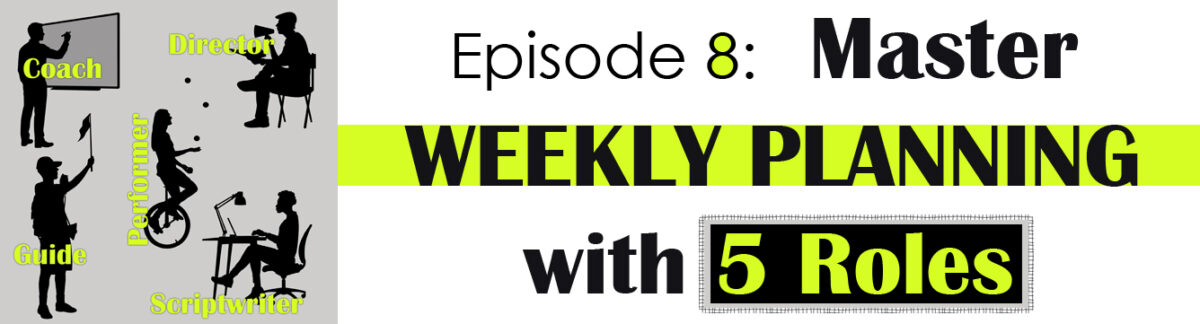
In this episode, we share a structured approach to intentional self-growth through the Weekly Transition Methodology, which utilizes five distinct roles—Guide, Director, Coach, Scriptwriter, and Performer—to provide the necessary mindsets for effective action planning. This framework helps individuals overcome common challenges in self-regulation and goal setting by aligning specific cognitive perspectives with the 16 steps of the planning process, from reflecting on past insights to executing "in the moment" behaviors. By internalizing these roles, practitioners can move beyond reliance on external "self-help" and instead take full command of their own development, using an inner compass to align daily actions with a long-term vision of their ideal self. This deep dive explores how each role contributes to a synergistic system for continuous improvement, transforming weekly planning into a powerful tool for enhancing both productivity and overall quality of life.
This episode is based on the following source:
Denna Hintze generated this podcast with Google's Notebook LM, checking and approving its content and quality. |
| |
|
Denna Hintze, Communications Director
A majority of the participants in the ongoing Self-Growth Project are Academy Members and nearly all are Process Educators. Phase III of the Project consisted of a six-month experiment where participants did the work to move from reactive living to intentional self-direction.
The report of what happened during those six months is a real eye-opener and we're happy to share the link to that episode of the Pacific Crest podcast, Listening to Learn, here: https://rss.com/podcasts/listening-to-learn/2554989/ |
| |
|
Tris Utschig, Professional Development Director
Spring 2026 IAoPE Professional Development Offerings
We’re excited to share a lineup of Spring 2026 professional development opportunities designed to support reflective practice, innovation in teaching, and practical application of process education principles. All sessions are open to IAoPE members and colleagues.
Workshop Series (Held on Wednesdays at 7pm Eastern time)
Register HERE
These interactive workshops focus on core and emerging areas of practice:
- March 18 — AI for Making Student Thinking Visible
- Josh Morrison will share insights from his recent work on using AI tools to surface student thinking, enhance feedback, and support learning analysis.
- April 8 — Activity Design for Learning
- Tris Utschig will lead a hands-on session focused on designing effective learning activities that align learning objectives with student engagement and assessment.
NEW Opportunity: A 30-Day Transformation Course (Pilot)
Call for Facilitators:
This spring, we’re piloting a 30-Day Transformation Course. The idea is to create a flexible, low-pressure way to engage deeply with a professional learning topic. We invite Academy Members to propose and lead a 30-day experience this spring. If the pilot is successful, we anticipate offering multiple transformation courses each year.
What it looks like:
- A 30-day curated learning experience
- Focused on a teaching, learning, or professional growth topic
- Facilitated by an IAoPE Academy Member
- Asynchronous participation with short daily or weekly prompts
- Optional weekly Zoom check-in for discussion and support
Possible formats include:
- Book or article discussion series
- Skill-building tutorial
- Guided reflection or practice challenge
- Mini-course or learning sprint
Please contact Tris Utschig (tutschig@kennesaw.edu) with your ideas. |
| |
|
Knut Are Romann-Aas, Webmaster
Denna Hintze, Communications Director
IJPE Policy on Ethical Use of Artificial Intelligence
The IJPE website is currently undergoing a major makeover (the new version is not quite available yet). Below is the new policy statement on Use of AI from the IJPE Board.
The International Journal of Process Education recognizes the potential of Generative AI (e.g., ChatGPT, Claude, Gemini) and AI-assisted technologies to support research and writing. However, consistent with the philosophy of Process Education, these tools must strictly serve as aids to—not replacements for—human critical thinking, cognitive processing, and creativity.
Authorship and Accountability
- AI Ineligibility for Authorship: In accordance with COPE guidelines, AI tools do not meet the criteria for authorship. They cannot take responsibility for the work, consent to publication, or manage copyright. Therefore, AI tools must not be listed as authors or co-authors.
- Human Responsibility: Authors are fully accountable for the accuracy, integrity, and originality of their work, including any portion assisted by AI. Authors must verify that AI-generated content is free from bias, "hallucinations" (false information), and plagiarism.
Disclosure and Transparency
Transparency is paramount in Process Education. If AI tools are used at any stage of the research or drafting process, authors must adhere to the following:
- Declaration: Authors must include a "Declaration of AI Use" statement at the end of the manuscript (before References)
- Specificity: The disclosure must specify the name of the tool (including version), the date of use (month and year), and the specific prompt(s) or method of application.
- Citation: AI-generated content must be clearly identified and parenthetically cited in the text and the reference list, adhering to the current IJPE Style Guide.
Image and Multimedia Integrity
- Prohibition on Generation: The creation of scientific figures, charts, or images using Generative AI is generally prohibited unless explicitly part of a research study on AI methods.
- Permitted Enhancements: AI tools used solely for image cleanup (e.g., noise reduction) must be declared. Manipulation that obscures, moves, or introduces features to the original data is strictly forbidden.
Peer Review and Editorial Confidentiality
- Confidentiality Breach: Manuscripts submitted to IJPE are confidential documents. Reviewers and Editors are strictly prohibited from uploading manuscripts (or parts thereof) into Generative AI tools (e.g., for summarization or critique). Doing so violates the authors' confidentiality and proprietary rights, as many public AI platforms retain data for training.
- AI-Assisted Assessment: Reviewers must not use AI to generate peer review reports. The assessment of a manuscript requires human judgment, domain expertise, and "Process" evaluation that AI cannot replicate.
|
| |
|
Matthew Watts, Treasurer
As members may be aware, the organization did approve a name change to the International Academy of Process Educators internally. However, as we are a non-profit organization incorporated through the New York State Department of State, we were waiting for official confirmation of our name change from them.
Great news, our request to amend the articles of incorporation were finally accepted and the name change is now official!
A special thanks to the board and membership overall in supporting this transition. If you have any question about the name change, feel free to contact your Treasurer at matthew.watts@rrcc.edu. |
| |
|
Summary of the February 11 Board Meeting
. . . |
| |
|
The Academy Board met on February 11, 2026, to discuss upcoming events, finalize conference details, and celebrate a significant organizational milestone. Here are the key takeaways from the session:
Exciting Organizational Milestone
- The Board is thrilled to announce that the “International Academy of Process Educators” is now official!
- This mark of formal recognition represents a major step forward for our global community.
2026 Conference Planning
Preparations for the 2026 Conference are well underway:
- Conference Swag: The Board approved the purchase of the “Tech Taco” as this year’s official conference giveaway.
- Workshops: Registration for Pre-Conference Workshops opens on February 15.
- Workshop Topics: Featured sessions include “PE in a Nutshell” and an “Introduction to Team-Based Learning”.
- Registration: Registration forms are now live and functional.
- Financial Goals: The Board is targeting $10,000 in registrations.
Upcoming PE Events
Mark your calendars for these upcoming PD sessions, all held at 7:00 PM EST:
- March 18: Using AI to Surface Student Thinking.
- April 8: Activity Design Workshop.
Membership & Operations
- Strategic Plan: Updates were provided regarding asynchronous resources, collaborative research, and membership metrics.
- Financials: The Q1 report has been posted for member review.
- Newsletter Contributions: A reminder that articles for the monthly newsletter are due to Denna by the 20th of each month.
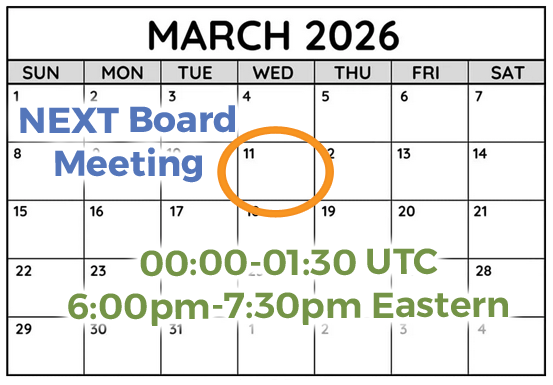
Next Meeting: March 11, 2026. |
| |
|
The DRAFT minutes from this Board Meeting are available HERE. |
| |
|
Staying Vigilant AND Informed
|
| |
|
Let us know:
- What have you achieved (WHO and WHAT)
- Suggest someone for an open board position (give us a NAME and POSITION)
- Request a workshop (please let us know the TOPIC, WHY you would find it valuable/useful, and CONTACT information so we can follow up with you)
- Pretty much anything else!
|
| |
|
The Current Academy of Process Educators Executive Board
|
| |
Chaya Jain (President)
Joshua Morrison (President Elect)
Patrick Barlow (Past President)
Matthew Watts (Treasurer)
Steve Spicklemire (Secretary) |
Peter Smith (Finance Officer)
Grace Onodipe (Member-at-Large)
Yuqin Hu (Member-at-Large)
Jim Morgan (Member-at-Large)
George Dombi (Member-at-Large) |
|
| |
|